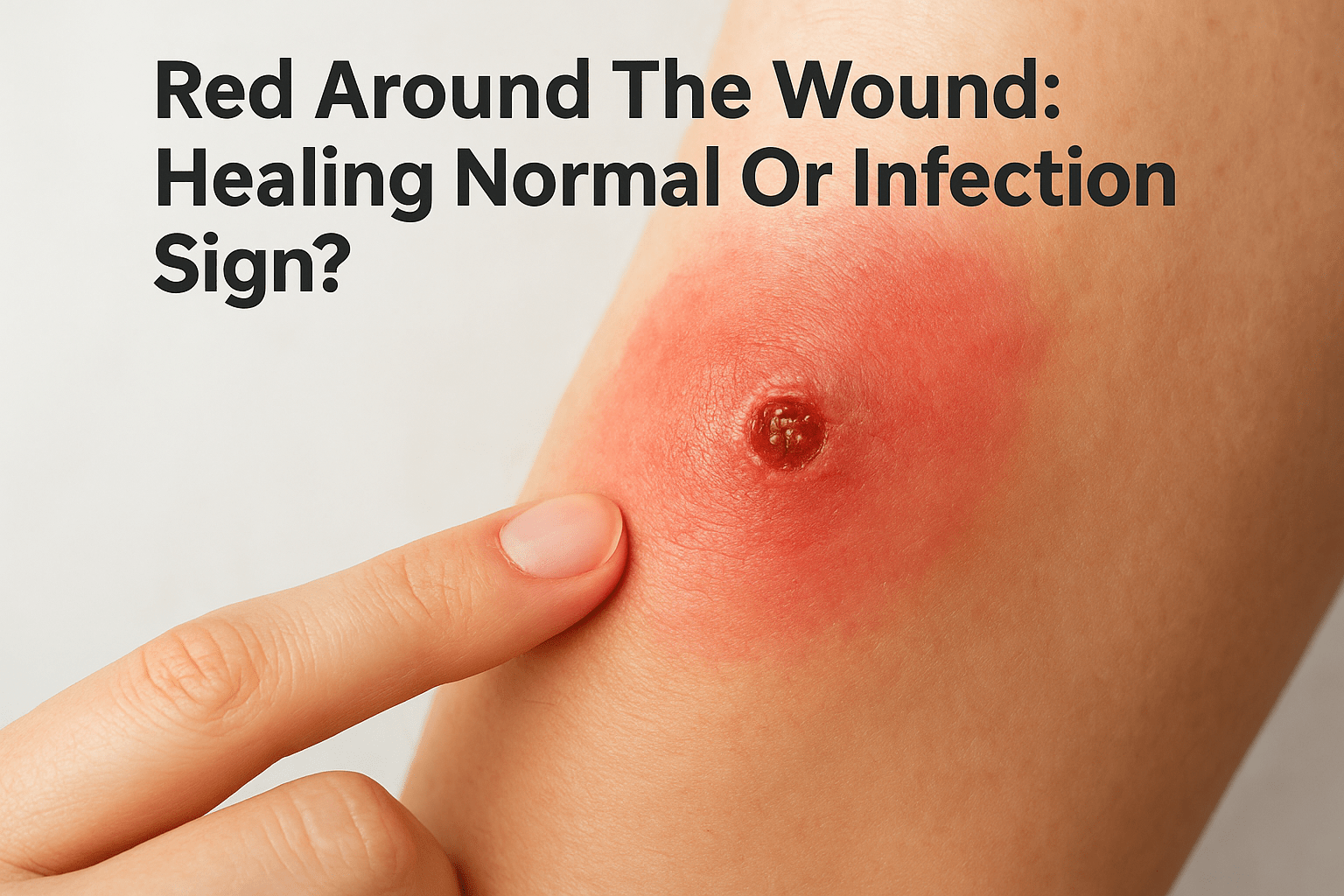
Red Around The Wound: Healing Normal Or Infection Sign?
You notice red around the wound after changing a bandage, and immediately your mind jumps to the worst-case scenario. Is this the start of an infection, or is your body simply doing its job? This question comes up constantly for patients recovering from surgery, managing diabetic ulcers, or caring for aging family members with chronic wounds that require close monitoring.
The truth is, some redness is completely expected during the healing process. Your body sends extra blood flow to the injured area, bringing immune cells and nutrients needed for tissue repair. But there’s a clear line between healthy inflammation and the warning signs of something more serious. Knowing the difference can mean the gap between a smooth recovery and a wound that spirals into a dangerous infection.
At Philadelphia Wound Care, our physician-led mobile team evaluates wounds like these every day, at bedsides, in skilled nursing facilities, and in patients’ own homes across the Philadelphia area. This article breaks down exactly what to look for, when redness signals trouble, and when it’s time to seek professional wound care rather than waiting it out.
Why redness happens during healing
Your body launches a complex biological response the moment your skin breaks, and redness is one of the first visible signs that this process has started. Within minutes of injury, your immune system recognizes damage and triggers what clinicians call the inflammatory phase of wound healing. This reaction isn’t a malfunction; it’s your body mobilizing resources to prevent infection and start repairs.
Your body’s inflammatory response in action
When tissue damage occurs, your cells release chemical messengers called cytokines and histamines that act like an emergency broadcast system. These signals tell your immune system exactly where help is needed. White blood cells rush to the site to fight off bacteria and clear away dead tissue, while platelets work to stop bleeding. This surge of cellular activity generates heat and causes the localized swelling and warmth you often feel around a fresh wound, even if infection isn’t present.
The inflammatory phase is a necessary step in healing, not a problem to eliminate.
Blood vessel changes that create visible redness
The red around the wound you see comes from a process called vasodilation, where blood vessels near the injury expand to allow more blood flow. Your body essentially widens the highway so emergency vehicles (immune cells and nutrients) can reach the damaged area faster. These dilated capillaries sit closer to your skin’s surface, making them visible as pink or red coloration. This increased circulation delivers oxygen, proteins, and growth factors that form the foundation of new tissue. The redness typically follows a predictable pattern in normal healing: brightest in the first few days, then gradually fading as your body shifts from inflammation to tissue rebuilding.
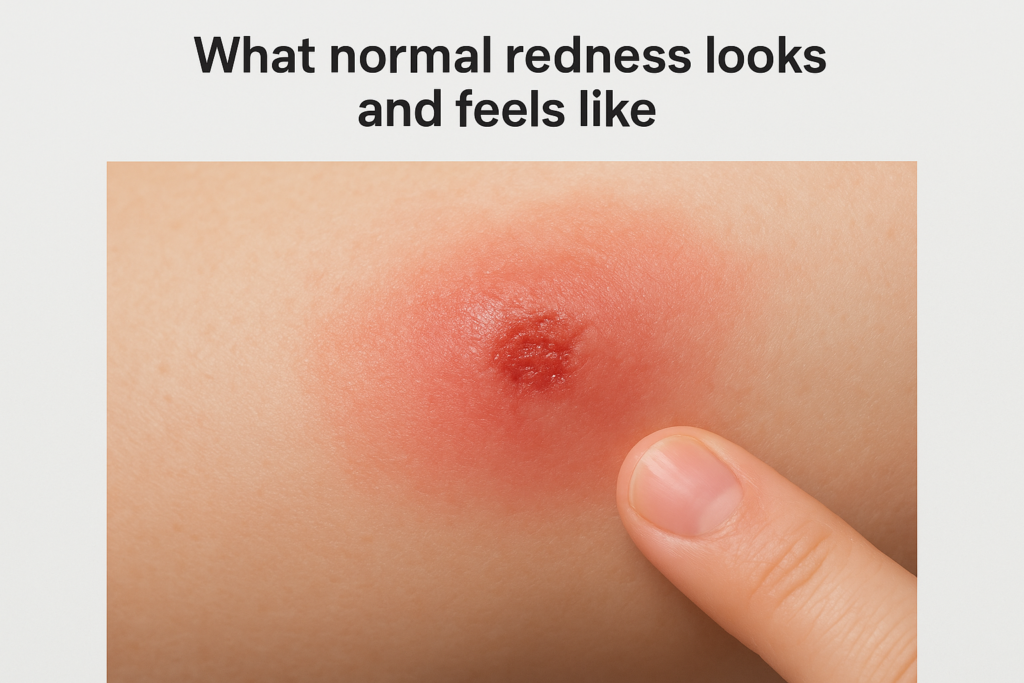
What normal redness looks and feels like
Normal healing redness follows predictable patterns that you can recognize with basic observation. When your wound heals properly, the red around the wound appears uniform in color and gradually fades from the edges inward over several days. The affected area stays limited to immediate tissue surrounding your wound, typically within a half-inch to one-inch border depending on injury size.
Visual characteristics of healthy inflammation Healthy redness looks smooth and even in tone, ranging from bright pink to light red during the first 48 to 72 hours. Your skin maintains its normal texture without developing a shiny, tight appearance that signals excessive swelling. The color intensity peaks within the first two to three days, then steadily lightens as your body transitions from inflammation to tissue repair.
Normal healing redness fades progressively, not suddenly or in unpredictable patterns.
How it should feel to the touch When you gently touch the area, you’ll notice mild warmth that matches your body’s natural inflammatory response. The skin feels slightly tender but not intensely painful with light pressure. Your wound site may feel somewhat firm due to tissue swelling, but this firmness shouldn’t feel rock-hard or increasingly tight as days pass. Any discomfort remains manageable with over-the-counter pain relief and doesn’t interfere with basic daily activities. When redness signals infection or complications.